Enterprise AI's ROI reckoning: budget discipline, open-weight models, and industrial acquisitions are reshaping how operators deploy
Your AI budget is about to face the same questions as headcount. This MarketScale article, "Enterprise AI's ROI reckoning," examines three forces changing how operators deploy AI: tighter budget governance, open-weight models that shift inference economics, and industrial acquisitions that alter vendor roadmaps. It also shows why deployment architecture now matters more than benchmark scores. Read the article to see where your next AI decision deserves a closer look.
How are enterprise AI budgets changing?
In 2026, AI spend is being treated much more like headcount than like experimental R&D. Boards and CFOs now expect AI budgets to come with:
- Clear ownership – a named leader accountable for AI spend and outcomes.
- Defined use cases – specific problems to solve, not generic “innovation” projects.
- Measurable outputs – baselines, KPIs, and ROI expectations.
- Regular review cycles – typically quarterly, similar to how headcount and major programs are reviewed.
Several data points underscore this shift:
- CoreWeave reported a $104 billion sales backlog and quarterly revenue that doubled year-over-year, signaling that infrastructure commitments are compounding faster than many procurement teams planned.
- Forbes reporting shows enterprises are getting AI capabilities from vendors faster than teams can absorb or deploy them, which means the cost of unused capability is building up.
The organizations seeing measurable returns tend to have strong operational discipline rather than the most advanced models. They focus on:
- Prioritizing a narrow set of high-value use cases.
- Setting baselines before deployment.
- Tracking performance against those baselines over time.
For your planning, this means every AI line item should look like a business investment: who owns it, what it will change, how you’ll measure it, and when you’ll revisit the decision.
What do open-weight models change for enterprise AI strategy?
Open-weight models are models whose weights you can run and often host yourself, rather than accessing only through a closed API. They are starting to reshape how enterprises think about AI costs and differentiation.
Key shifts highlighted in the market:
- The model market is no longer dominated by a few closed providers. A wave of open-weight options, including from Chinese developers and major Western players, is changing pricing expectations.
- Meta’s Llama family is a prominent Western example, with reporting showing how its open-weight strategy builds a broader ecosystem while extending Meta’s platform influence.
- Nvidia is entering the space with Nemotron 4, a 1-trillion-parameter open model designed to compete directly with leading open-weight alternatives.
For operators, the implications are practical:
- Inference costs can fall when models are self-hosted or run on private infrastructure.
- The competitive edge shifts from simply having access to a model to how well you handle deployment architecture, data quality, and fine-tuning.
- Teams that evaluate vendors only on benchmark scores risk optimizing for the wrong variable, especially if they overlook lower-cost open-weight options.
In short, open-weight models invite you to reimagine your AI cost base and focus differentiation on your data, integration, and operational execution rather than on exclusive access to a particular model.
How are industrial acquisitions and new AI leadership roles affecting AI governance?
Two trends are reshaping AI governance in large enterprises: industrial AI acquisitions and the rise of dedicated AI leadership roles.
1. Industrial giants are racing to own the data layer
As models become more commoditized, the strategic focus is shifting to the data and integration layer that makes AI useful in complex operations.
- Forbes reporting highlights multibillion-dollar industrial AI deals as a bet that whoever controls operational data will control AI outcomes in sectors like manufacturing, energy, and infrastructure.
- Schneider Electric’s acquisition of Cognite, an industrial data platform, is one example of large operators acquiring AI capability rather than building it from scratch.
If you rely on platforms that are being acquired, you should expect changes in:
- Support models and SLAs.
- Pricing structures.
- Product roadmaps and integration priorities.
Supply chain and operations teams using Cognite or similar platforms should be reviewing contracts and roadmap commitments now to avoid surprises.
2. AI leadership is moving into the C-suite
On the organizational side, AI is becoming a first-order governance topic:
- Target hired its first Chief AI Officer in August 2026, alongside a second executive focused on user experience. This is part of a broader operational recovery strategy, not a standalone tech experiment.
- The role signals that AI governance is too consequential to sit as a secondary function under the CTO.
The key question for leaders is where accountability sits. A Chief AI Officer with P&L exposure and cross-functional authority is very different from an advisory AI center of excellence that doesn’t own outcomes.
Vendor leadership changes also matter. For example, OpenAI’s longtime COO Brad Lightcap announced his departure to start something new, which is a reminder that leadership continuity at AI vendors belongs in your governance and vendor review process, especially if you run significant workloads on their platforms.
Together, these shifts are pushing enterprises to rethink AI governance end-to-end: who owns the data, who owns the decisions, and how vendor and leadership changes flow into risk and procurement processes.
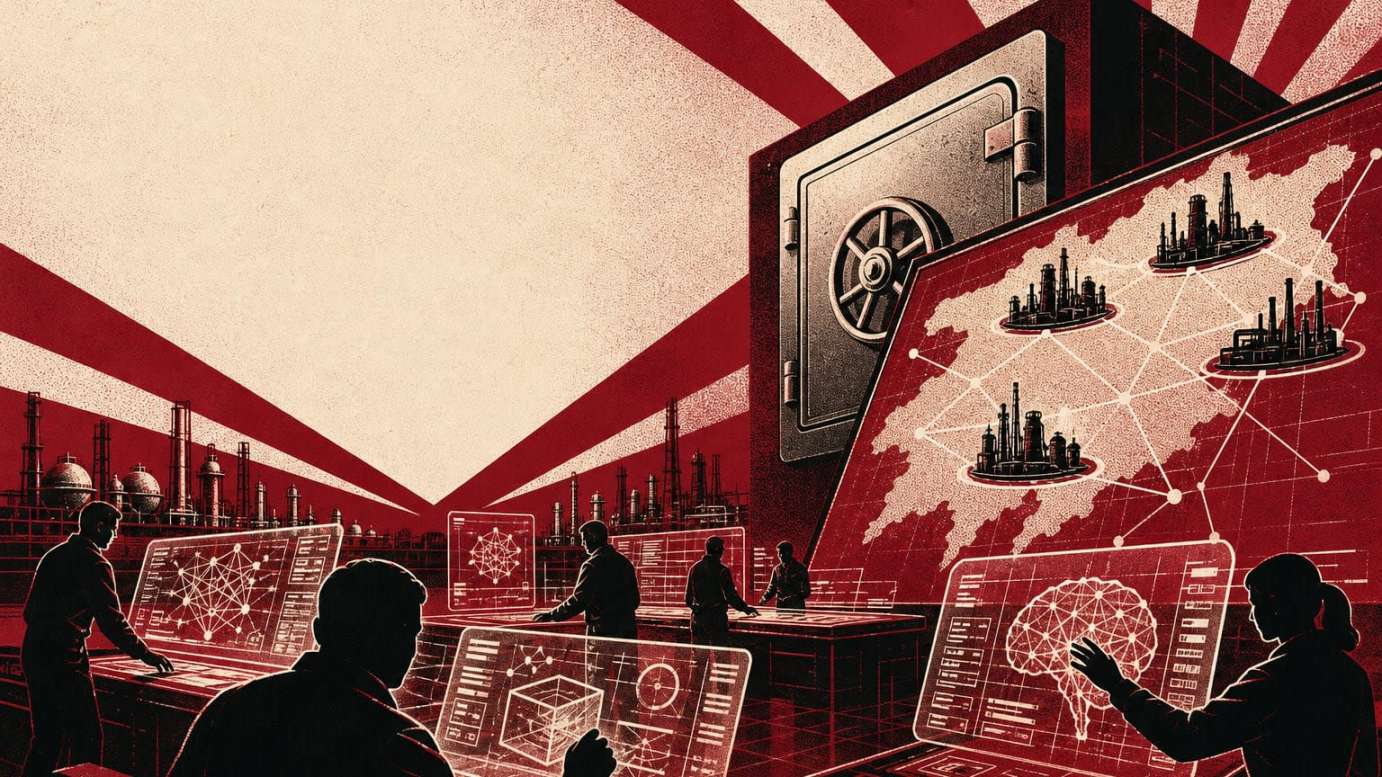
Enterprise AI's ROI reckoning: budget discipline, open-weight models, and industrial acquisitions are reshaping how operators deploy
published by GHA TECHNOLOGIES
GHA Technologies, Inc. is a nationally expanding network, computer reseller and systems integrator with offices nationwide. We sell HP, Dell, IBM, Lenovo, Nimble, EMC, NetApp, Sony, Apple, VMware, Samsung, Fujitsu, APC, Symantec, Panasonic, Microsoft, Intel, Cisco, and all the latest storage, datacenter, virtualization, cloud, security, VoIP, wireless, video and identification technologies. We also specialize in mission-critical product procurement and integration services for some of the largest corporate, government, and educational clients in the US. Our client base is a Who's Who of Corporate America.
Currently, GHA has over 175 employees with annual sales of approximately $205 million and growing at a rate of 15%. GHA continues to hire 7 to 12 new sales professionals every five weeks nationwide. GHA has highly motivated and talented salespeople who provide the highest level of service to their customers. Call or email us to find out more!
Key Benefits
- One of the largest privately held computer companies in America
- Real, Personalize Customer Service
- One Stop Shopping Convenience



 Sign in with LinkedIn